
Blog
Choosing the right sticker size for small businesses in Australia
Why sticker size matters for small businesses Stickers do more than decorate packages, they help products stand out, provide legally required information and reinforce your


Stickers do more than decorate packages, they help products stand out, provide legally required information and reinforce your brand. Choosing the correct dimensions ensures that the design fits the available space and stays readable once printed. Using a sticker that’s too small can make your logo illegible, while an oversized label might overwhelm a bottle or takeaway cup.
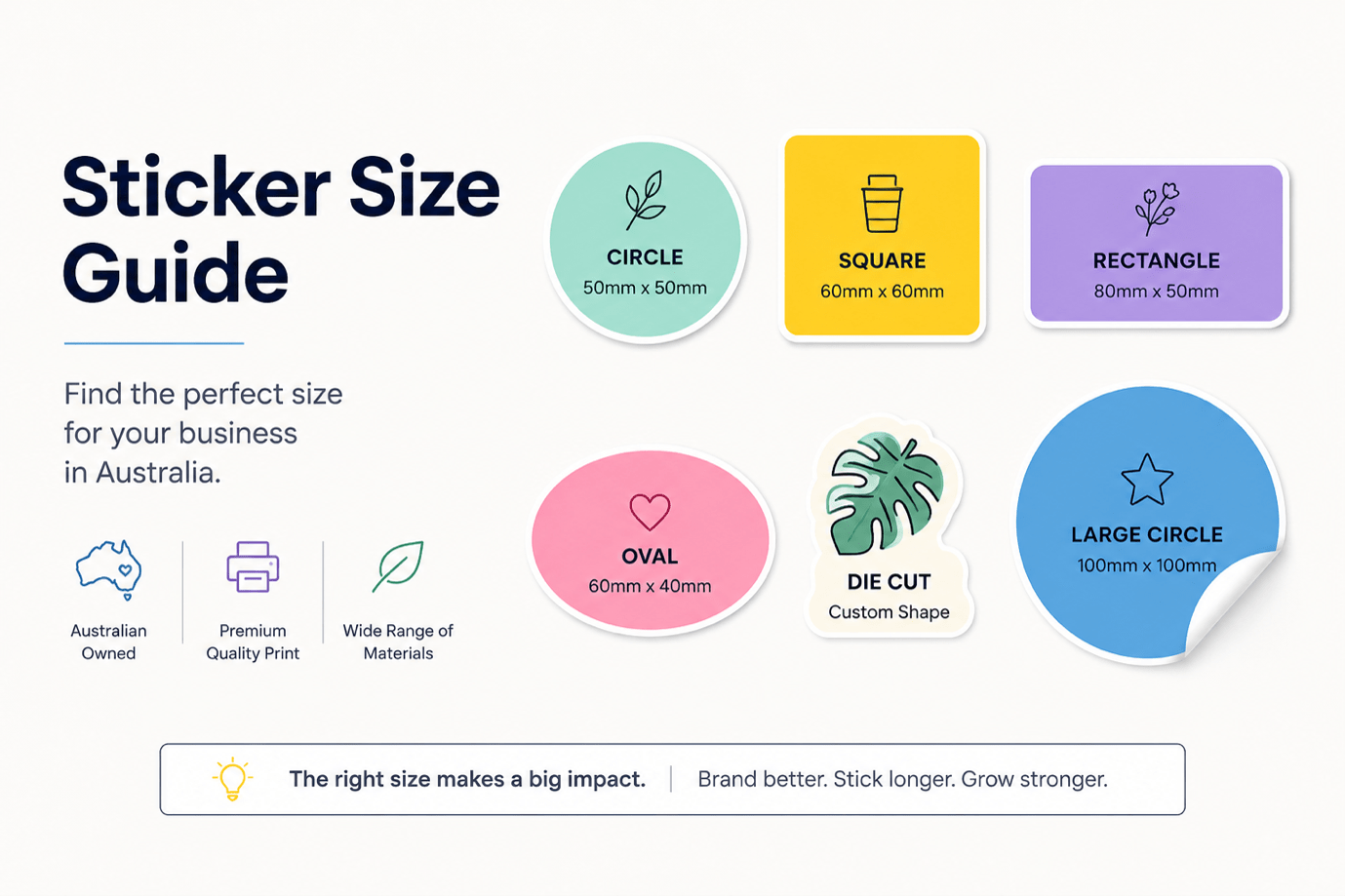
Every sticker printer offers custom dimensions, but working within industry‑standard sizes can reduce costs and ensure compatibility. The table below summarises popular shapes with their typical uses and approximate metric dimensions.
| Shape and example use | Standard inch size | Ideal for |
| Circle – logo seals, security dots, product labels | 1 × 1 in | Small circles suit logos or seals |
| 2 × 2 in | Suitable for pricing stickers or laptop decals | |
| 3 × 3 in / 5 × 5 in | Larger vinyl stickers for laptops, skateboards and fridges | |
| Square – QR codes, social icons, minimal packaging | 3 × 3 in | Works well for artwork, QR codes and small product packaging |
| 5 × 5 in | Ideal for graphics‑heavy designs and event giveaways | |
| Rectangle – tags, ingredient labels, shipping info | 3.5 × 2 in | Business‑card size; used for name tags or minimalist labels |
| 4 × 3 in / 4 × 6 in | Popular for ingredient lists, shipping labels and branding panels | |
| Oval – jars, coffee cups, curved surfaces | 1.5 × 2 in / 2 × 3 in | Fits jars, takeaway cups or long brand names |
| Bumper – car and campaign stickers | 11.5 × 3 in | Standard bumper sticker for slogans and awareness campaigns |
| 8 × 4 in / 12 × 4 in | Optional sizes for narrow bumper spaces or windows |
These dimensions are starting points; custom die‑cut stickers can be made in any size or shape to follow the outline of your artwork. When choosing a shape, think about how the design and text will flow inside it. Ovals, for instance, offer more horizontal room for long brand names than circles.
For larger labels printed on A4 sheets, the following guide can be used.
| Labels per A4 sheet | Shape | Typical use |
| 1 per sheet (210 × 297 mm) | A full A4 sheet | Large parcels, furniture or electronics; when you need one large shipping or branding label |
| 4 per sheet (99.1 × 139 mm) | Medium rectangle | PR packages and brand parcels; readable on camera |
| 8 per sheet (99.1 × 67.7 mm) | Shoebox sized labels | Bulk orders and parcels similar in size to a shoebox |
| 12 per sheet (63.5 × 72 mm) | Medium square | Mass production and daily labelling; still noticeable and professional |
| 14 per sheet (99.1 × 38.1 mm) | Slim rectangle | Short text such as names; office shelving or book labels |
| 21 per sheet (63.5 × 38.1 mm) | Small rectangle | Small product labels, bottles, water bottles and lunch boxes |
Selecting dimensions is about more than aesthetics; it involves understanding where the sticker will live and how it will be used.
Choosing the right sticker size and material is essential for small businesses looking to enhance branding, streamline shipping and manage costs. By understanding standard sizes for popular shapes, recognising when to use large or small labels and selecting materials that suit the product environment, you can ensure your stickers look professional and perform as intended.
As a specialist sticker printer, Boing Boing Stickers and Labels offers a full range of sizes, materials and adhesive options to meet your needs. Whether you need waterproof vinyl bumper stickers, eco‑friendly paper labels for jars or premium textured estate labels for boutique products, our team can guide you through every step – from design and size selection to printing and application. Contact us today to discuss your project and receive a tailored quote.
Why sticker size matters for small businesses Stickers do more than decorate packages, they help products stand out, provide legally required information and reinforce your
The Ultimate Guide to Choosing the Right Outdoor Sticker Peeling vehicle sticker due to incorrect material choice. Placing your branding outdoors means exposing it to